
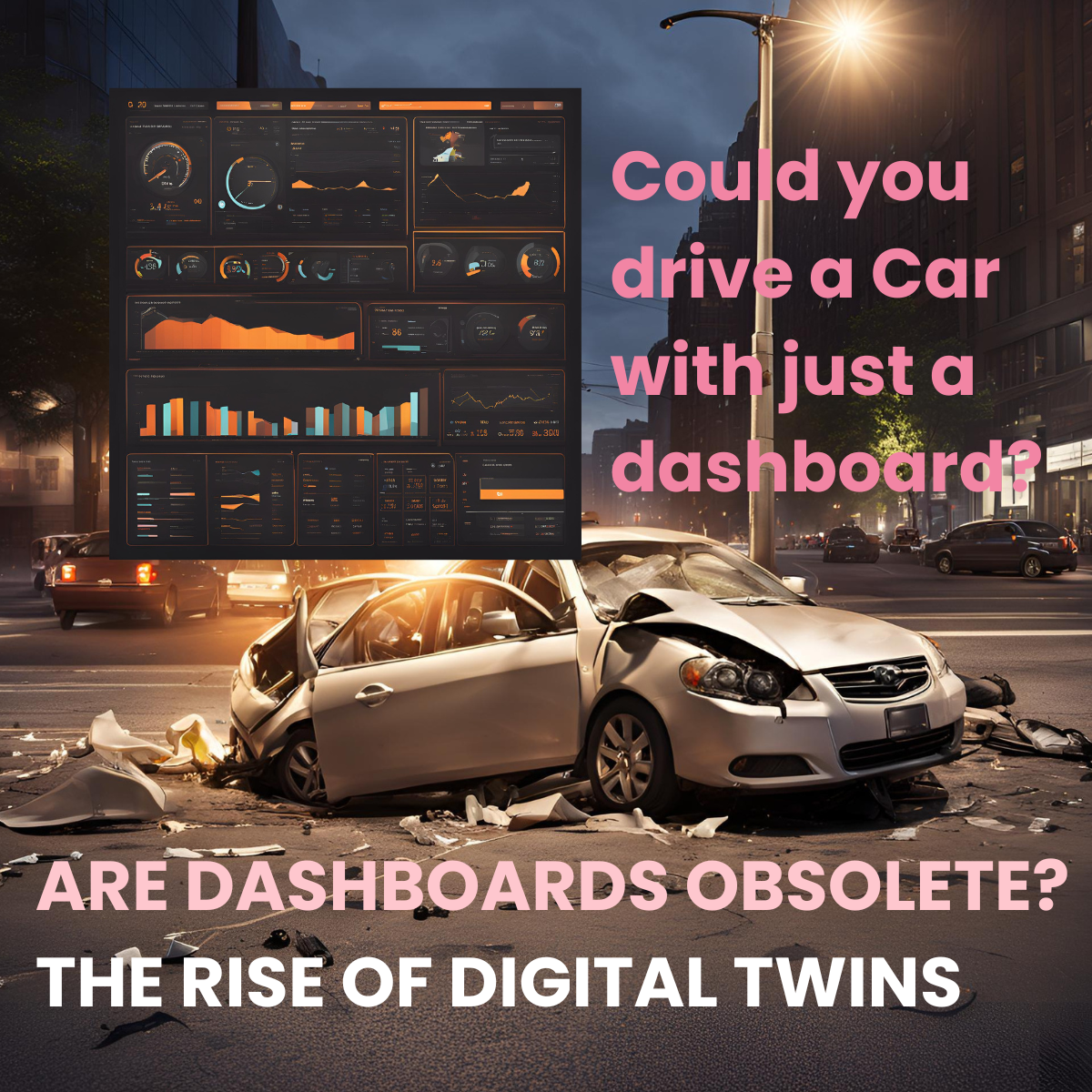
Driving the Future: How Digital Twins Transform Data Interaction
Imagine driving a car where all you had were dashboards filled with numbers, graphs, and indicators. While dashboards provide essential information, they can be overwhelming and difficult to interpret quickly, especially in critical situations. Now, picture having a co-pilot who not only reads the dashboards but also interprets the data, predicts potential issues, and suggests the best routes. This is the transformative power of digital twins in data interaction.
From Dashboards to Intuitive Interfaces
Digital twins are revolutionising how we interact with data by moving beyond traditional dashboards to more intuitive and interactive interfaces. Here’s how this shift is akin to enhancing the driving experience:
Holistic View: Just as a co-pilot provides a comprehensive understanding of the road ahead, digital twins offer a holistic view of systems by integrating data from various sources. This unified perspective helps decision-makers see the bigger picture and make more informed choices.
Predictive Insights: Imagine your co-pilot predicting traffic jams or suggesting alternative routes based on real-time data. Digital twins use predictive analytics to forecast future scenarios, allowing for proactive decision-making and problem-solving.
Real-Time Monitoring: A co-pilot constantly monitors the car’s performance and the road conditions, providing real-time updates. Similarly, digital twins continuously monitor systems, offering up-to-date information that is crucial for timely interventions and optimisations.
Scenario Simulation: Before embarking on a journey, a co-pilot might simulate different routes to find the most efficient one. Digital twins enable the simulation of various scenarios, helping decision-makers test strategies and assess their impact without disrupting actual operations.
The Driving Metaphor in Action
Consider a water utility company managing a complex network of pipes, pumps, and treatment plants. Traditional dashboards might display data on water flow, pressure, and quality, but interpreting this data quickly and accurately can be challenging. With digital twins, the utility can:
- Visualise the Entire Network: Just as a co-pilot visualises the entire journey, digital twins provide a visual representation of the water network, making it easier to understand and manage.
- Predict and Prevent Issues: By analysing data patterns, digital twins can predict potential leaks or failures, much like a co-pilot anticipating road hazards.
- Optimise Operations: Digital twins can simulate different operational strategies to find the most efficient and cost-effective methods, akin to a co-pilot suggesting the best routes.
Enhancing Team Collaboration
In addition to improving operational efficiency, digital twins foster better collaboration across different teams within an organisation. Here’s how:
- Shared Insights: Just as a co-pilot shares critical information with the driver, digital twins provide a shared platform where all teams can access and interpret data. This transparency ensures that everyone is on the same page and aware of how operations might impact their roles.
- Proactive Communication: Imagine the co-pilot alerting passengers about upcoming stops or changes in the route. Digital twins enable proactive communication between teams, such as operations and customer service, ensuring that any changes or issues are communicated promptly and effectively.
- Coordinated Responses: In the same way a co-pilot helps coordinate actions during a journey, digital twins facilitate coordinated responses across teams. For example, if a maintenance issue is detected, both the operations and customer service teams can prepare and respond accordingly, minimising disruptions and enhancing customer satisfaction.
Enhancing Team Collaboration
As digital twin technology continues to evolve, its applications will expand across various industries, from water management to manufacturing and beyond. By providing a more intuitive and interactive way to interact with data, digital twins are empowering decision-makers to drive their organisations towards greater efficiency and sustainability.
In conclusion, just as a co-pilot enhances the driving experience by interpreting data and providing actionable insights, digital twins are transforming how we view and interact with data. By moving beyond traditional dashboards to more intuitive interfaces, digital twins are paving the way for smarter, more informed decision-making and fostering better collaboration across teams.