Why Focusing on Commercial Smart Meters First Could Save Homeowners Money
The Case for Prioritising Non-Residential Smart Meters
Higher Revenue Coverage:
Non-residential customers, such as businesses and industrial facilities, typically have higher water usage compared to residential customers. By installing smart meters in these high-usage areas first, utilities can quickly recover their investment through increased billing accuracy and efficiency
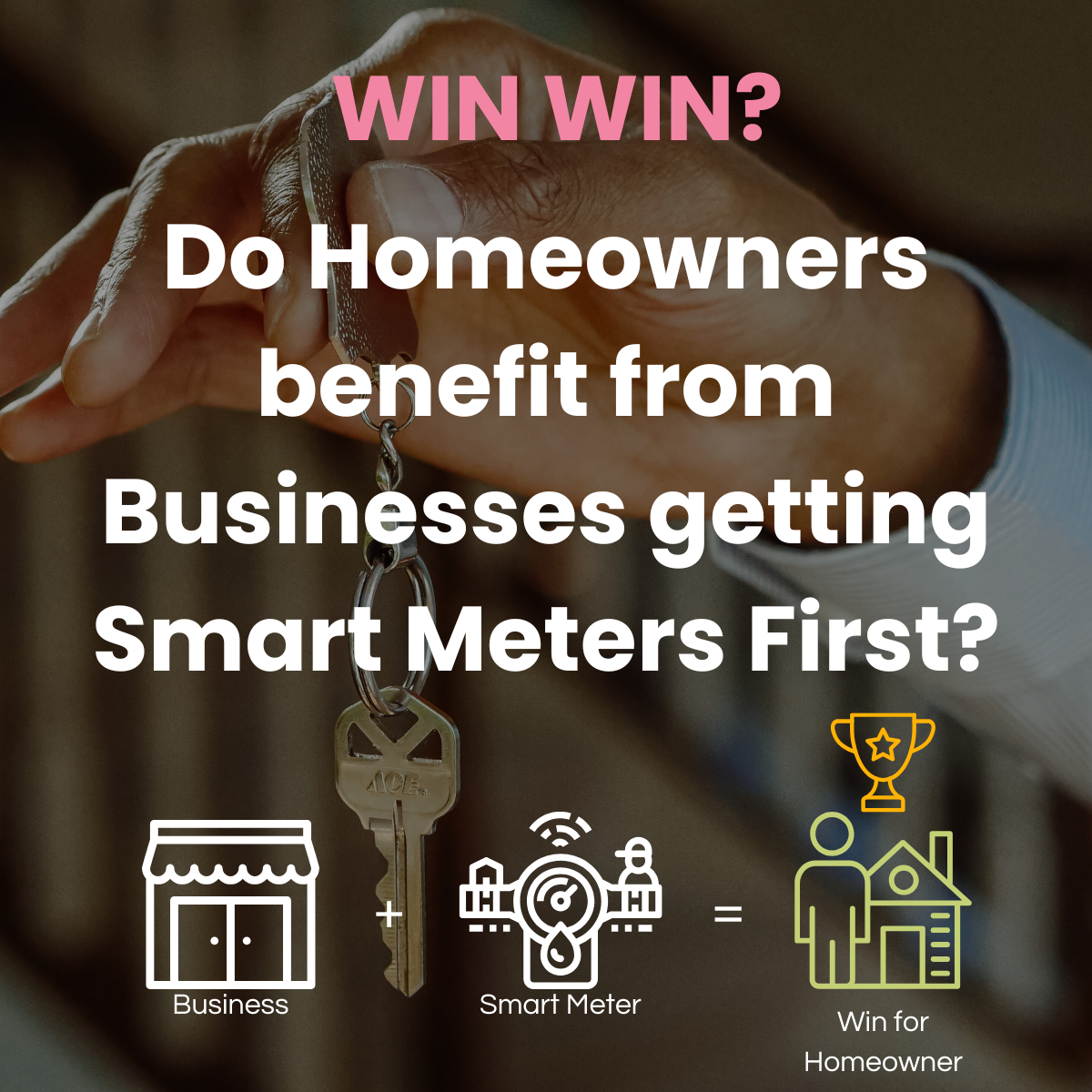
This higher revenue coverage can help subsidise the cost of rolling out smart meters to residential customers, ultimately reducing the financial burden on homeowners.
Economies of Scale:
Large-scale installations in commercial properties can lead to economies of scale, reducing the overall cost per meter. These savings can then be passed on to residential customers, making the technology more affordable for everyone
Improved Water Management:
Smart meters provide real-time data on water usage, helping utilities detect leaks and inefficiencies more quickly. By focusing on non-residential customers first, utilities can address significant water losses in commercial properties, leading to better overall water management. This improved efficiency can result in lower operational costs, which can be reflected in lower water rates for residential customers
Enhanced Resource Allocation:
With accurate data from smart meters, utilities can better allocate resources and plan for future infrastructure needs. Prioritising non-residential customers allows utilities to gather valuable data on high-usage patterns, which can inform more effective water management strategies. This proactive approach can help prevent costly infrastructure upgrades, ultimately benefiting all customers
Faster ROI:
The return on investment (ROI) for smart meters is typically faster in non-residential settings due to higher usage and billing amounts. This quicker ROI can free up funds for further investments in residential smart meter roll-outs, accelerating the overall deployment process and ensuring that all customers benefit from the technology sooner
Public Perception and Support:
Demonstrating the benefits of smart meters in non-residential settings can help build public support for the technology. When residential customers see the positive impact on businesses, such as reduced water waste and lower costs, they may be more inclined to support and adopt smart meters in their own homes
By focusing on non-residential customers for smart meter roll-outs, utilities can create a financially sustainable model that benefits both businesses and homeowners. This strategy not only ensures a quicker return on investment but also paves the way for more affordable and efficient water management solutions for all customers.